

Which WaveTherm Wedgelock Is Right for Your Application?
The wedgelock is one of the most application-specific components in a VPX system. Choosing the wrong one can mean poor thermal contact, cards that jam in the chassis during field maintenance, or insufficient retention under shock and vibration. This guide covers WaveTherm's full wedgelock product line and maps each configuration to the applications it was designed for.
WaveTherm Wedgelock Offerings
All WaveTherm wedgelocks use the patented SOLIDWEDGE™ design, featuring solid aluminum segments for maximum thermal cross-section and positive retraction for reliable removal. Many of these options can be combined and are not mutually exclusive.
- High Force SOLIDWEDGE™: 45° ramp angle for strong clamping force, up to 1,000 lbs depending on configuration.
- Max Force SOLIDWEDGE™: 30° ramp angle for maximum clamping force, up to 1,200 lbs depending on configuration.
- MAGNUM SOLIDWEDGE™: Large .375" x .375" profile for applications that can accommodate it, delivering up to 2,300 lbs of clamping force with a significantly larger thermal cross-section.
- Belleville Upgrade: Available on most SOLIDWEDGE™ wedgelocks. Replaces split lock washers with Belleville washers to maintain consistent clamping force over thermal cycles and eliminate a source of FOD.
- Hybrid Wedgelock: Supports both conduction cooling and airflow-through cooling for hybrid-cooled VPX system architectures.
- QUICK-LOCK (SWD): Double-threaded drive screw for 2x faster installation and removal, with EMUGE Self-Lock™ threads that eliminate the need for split lock washers or Belleville washers as secondary locking hardware.
- Torque Limiting SOLIDWEDGE™ (SWT): Patent-pending built-in torque limiter for field-level maintenance without special tooling or risk of operator error.
- Big Boss SOLIDWEDGE™: Oversized 0.075" mounting boss that interfaces with the heatframe, providing greater thread engagement with the mounting blocks and a stronger overall connection point for the wedgelock.
- Active Segments: Most SOLIDWEDGE™ wedgelocks are available with 5 or 7 active segments. More segments generate higher clamping force for the same wedgelock size and type.
How Do the SOLIDWEDGE™ Force Series Differ and Which Should I Choose?
Beyond clamping force, High Force and Max Force also differ in available profile sizes. High Force is available as small as .225". The smallest Max Force is .270" x .225", making it narrow but taller than the smallest High Force and considerably taller than the smallest QUICK-LOCK, which comes in at .200" x .250".
The right choice depends on your clamping force requirement and the clearance available in your design. If height is the binding constraint, High Force and QUICK-LOCK allow for smaller profiles than Max Force. If height is not limiting and you need higher clamping force, Max Force delivers it within a similarly narrow footprint. Both series are compatible with other SOLIDWEDGE™ options including the Belleville upgrade, Big Boss mounting boss, and Torque Limiting.
For applications with the most demanding retention and thermal requirements and space to accommodate a larger profile, the MAGNUM SOLIDWEDGE™ is in a different class entirely. See the next section for details.
How Does the Number of Active Segments Affect Clamping Force?
Most SOLIDWEDGE™ wedgelocks are available with 5 or 7 active segments. For the same wedgelock size and type, more segments generate higher clamping force. If you need more retention or thermal contact than a 5-segment wedgelock provides but are not ready to move to a larger profile or different force series, specifying 7 segments is the next step. That said, 7-segment wedgelocks add mechanical complexity and are not recommended for vertical chassis orientations. If the additional clamping force is not required, the 5-segment configuration is the simpler and preferred choice. For a detailed breakdown of how segment count factors into clamping force calculations, see How SOLIDWEDGE™ Clamping Force Is Calculated.
What Wedgelock Is Best for High-Shock, High-Vibration Environments?
For most high-shock, high-vibration applications, the right starting point is WaveTherm's Max Force SOLIDWEDGE™ combined with the Big Boss mounting boss and the Belleville upgrade. Max Force generates up to 1,200 lbs of clamping force through its 30° ramp angle. The Big Boss provides a larger mounting boss that interfaces with the heatframe, increasing thread engagement with the mounting blocks and creating a stronger connection point between the wedgelock and the card assembly. The Belleville upgrade replaces split lock washers with Belleville washers, maintaining consistent preload through thermal cycles and shock events without shedding debris.
When the chassis slot can accommodate a larger profile, WaveTherm's MAGNUM SOLIDWEDGE™ wedgelocks step up further with a .375" x .375" cross-section and up to 2,300 lbs of clamping force. The larger profile enables a larger drive screw, which can sustain significantly higher loads before yielding, and provides a substantially larger thermal cross-section for improved heat transfer to the chassis cold wall. It is the appropriate choice where physical room for the larger form factor is available and maximum retention and thermal performance are required. For a detailed look at how clamping force is generated in SOLIDWEDGE™ wedgelocks, see How SOLIDWEDGE™ Clamping Force Is Calculated.
When Should I Specify the Big Boss SOLIDWEDGE™?
WaveTherm recommends the Big Boss SOLIDWEDGE™ whenever the heatframe design can accommodate it. The larger 0.075" boss provides more thread engagement with the mounting blocks, creating a stronger and more reliable connection between the wedgelock and the card assembly compared to a standard boss.
The primary design constraint is heatframe thickness. WaveTherm typically recommends approximately .230" of frame thickness at the wedgelock mounting location to support the Big Boss properly. This is more easily achieved on secondary side heatframes, where there is typically more material available in that area. Primary side heatframes are more likely to be constrained by the stack-up of the cover thickness plus the PCB, which can make the Big Boss harder to accommodate. If your heatframe design can meet the thickness requirement, WaveTherm recommends specifying Big Boss as the default.
What Wedgelock Is Best for Constrained Slot or Low-Profile Applications?
When available clearance limits which wedgelocks will physically fit, profile size becomes the first filter. That clearance is driven by both the slot and the card design. The force series differ in how small they get in terms of profile height. WaveTherm's High Force SOLIDWEDGE™ wedgelocks allow for smaller profiles than Max Force, and QUICK-LOCK allows for the smallest profiles of all.
WaveTherm's QUICK-LOCK wedgelocks are available in .200" x .250" and .270" x .250" profiles, giving them a compact footprint while adding the speed advantage of a double-threaded drive screw. For applications that need both a small profile and fast installation, QUICK-LOCK covers both requirements. Note that QUICK-LOCK is currently only available in the Big Boss configuration.
If your design is slot-constrained, confirm the available clearance before selecting a configuration. Profile size availability varies by mounting distance, so consult WaveTherm's engineering team or the product listings to confirm which configurations are offered at your required size.
What Wedgelock Is Best for Two-Level Maintenance (2LM)?
Two-Level Maintenance requires field technicians to swap cards without specialist tools or calibration equipment. Standard wedgelock installation requires a torque wrench to achieve the correct clamping force. Under-torquing leaves the card loose. Over-torquing risks damaging the card edge, chassis slot, or wedgelock. In a forward-deployed environment, neither outcome is acceptable.
WaveTherm's Torque Limiting SOLIDWEDGE™ wedgelocks solve this with a patent-pending built-in mechanism that disengages once the correct torque is reached. The wedgelock self-limits at the proper clamping force every time, regardless of the tool used or the technician's experience level. No torque wrench required. No operator error possible. The torque limiting feature is available across WaveTherm's wedgelock configurations and can be combined with other options such as the Belleville upgrade.
What Wedgelock Allows the Fastest Installation and Removal?
WaveTherm's QUICK-LOCK wedgelocks use a double-threaded drive screw that advances twice as fast as a standard single-thread screw, cutting installation and removal time in half. They incorporate EMUGE Self-Lock™ locking threads, which eliminate the need for split lock washers or Belleville washers as secondary locking hardware. This reduces foreign object debris (FOD) risk, a critical consideration in aerospace and defense environments where loose hardware fragments can cause equipment failure.
QUICK-LOCK wedgelocks are available in profiles from .200" to .250", making them a viable option in tight-clearance slots as well as high-frequency swap applications. They are well suited for systems with high card swap frequency, test environments, or any application where minimizing installation time is a priority without sacrificing retention performance.
How Does PCB Thickness Affect Wedgelock Selection?
On primary side heatframes, PCB thickness directly constrains the available space for wedgelock profile height. A thicker PCB leaves less clearance, which limits which profile sizes will physically fit. Primary side designs also tend to have worse thermal performance, because the primary side frame cover cannot make direct contact with the cold wall. Heat from components must conduct through the PCB substrate to reach the frame-to-cold-wall path, and PCB substrate is a poor thermal conductor. For a detailed breakdown of how heat flows through a conduction-cooled module, see How Wedgelock Thermal Performance Is Measured.
On secondary side heatframes, PCB thickness does not affect wedgelock profile height selection directly, making secondary side designs more accommodating of larger profiles and generally better for thermal performance.
For a detailed breakdown of primary side vs. secondary side orientation and the thermal implications of each, see How Wedgelock Thermal Performance Is Measured.
What Finish Should I Specify?
WaveTherm wedgelocks are available in various plating options. WaveTherm recommends one of the following three for most applications.
- Black Anodize (BA): Standard finish for most VPX applications. Good corrosion resistance and wear resistance for general-purpose use.
- Hard Black Anodize (BH): Harder and more wear-resistant than standard anodize. Suited for high-cycle applications or abrasive environments.
- Electroless Nickel (EN): Uniform, hard coating with excellent corrosion resistance and good thermal conductivity. Often specified for space and high-reliability applications.
If your program has a specific finish requirement, WaveTherm's engineering team can advise on the right option for your application.
Quick Recommendations
For standard OpenCOTS heatframe designs, the OpenCOTS configuration tool can help identify the right wedgelock for your application. The recommendations below cover common configurations as a starting point.
VITA 48.2 3U Primary Side, 160mm Cards
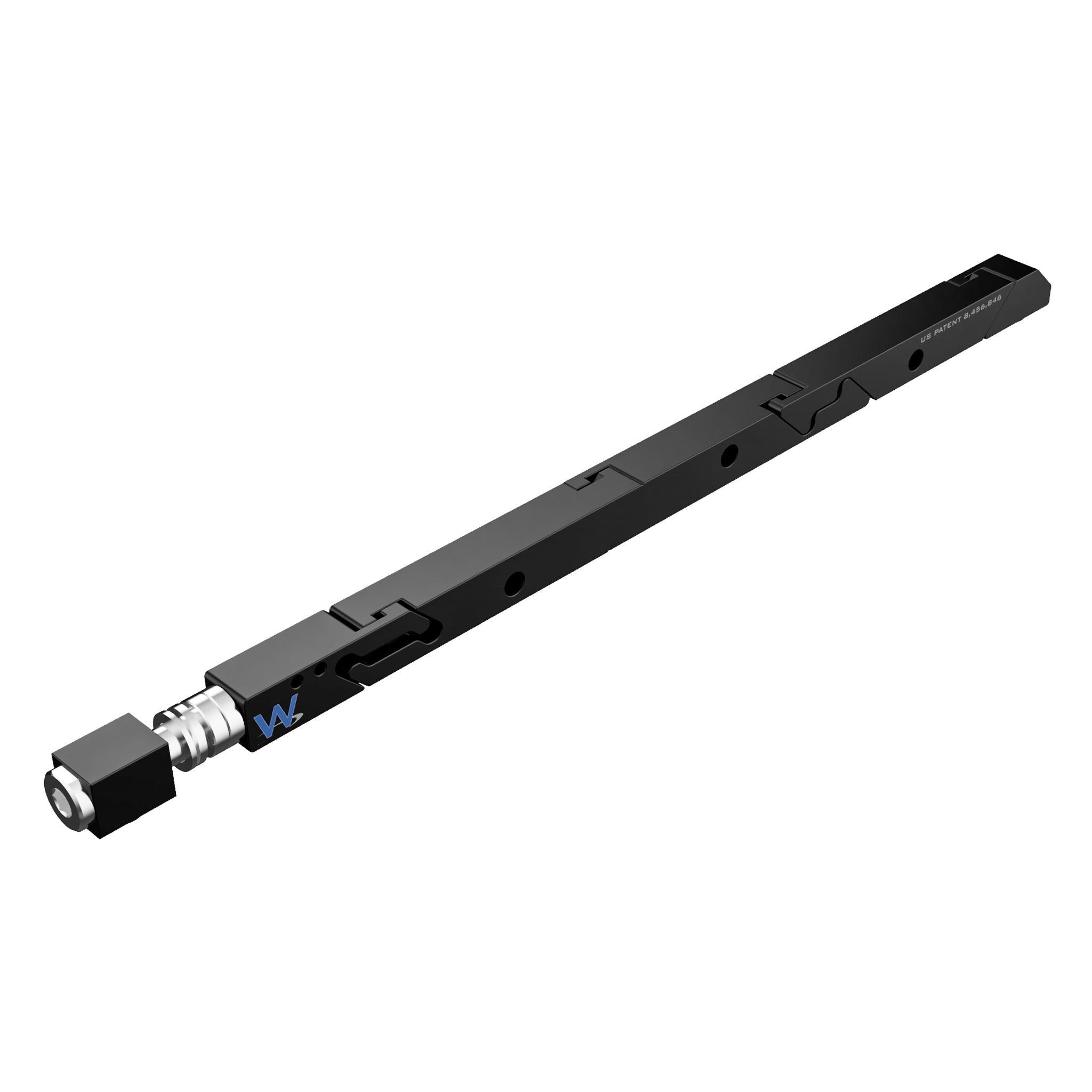
SW5-48-225-225 High Force Belleville
.225" x .225" profile | High Force | Belleville upgrade | Smallest High Force profile | Up to 700 lbs clamping force
VITA 48.2 3U Secondary Side, 160mm Cards
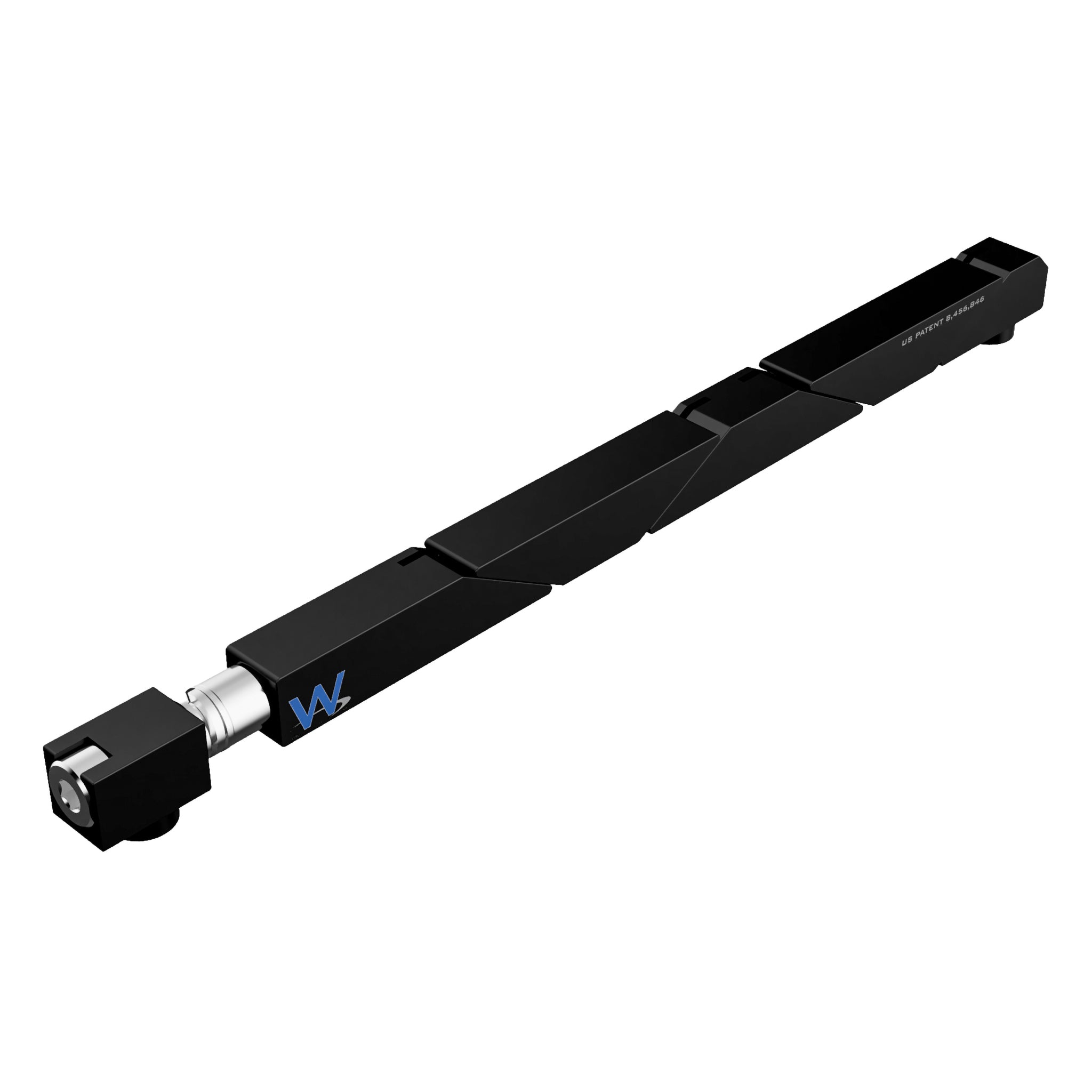
SW5-43-270-250 Max Force Big Boss Belleville
.270" x .250" profile | Max Force | Big Boss | Belleville upgrade | Up to 1,200 lbs clamping force
VITA 78 3U Secondary Side, 160mm Cards

SW5-455-275-300 Max Force Big Boss Belleville #6
.275" x .300" profile | Max Force | Big Boss | Belleville upgrade | VITA 78 sizing | Up to 1,000 lbs clamping force

SWT5-455-275-300 Max Force Torque Limiting
.275" x .300" profile | Max Force | Torque Limiting | 2LM compatible | VITA 78 sizing | Up to 800 lbs clamping force
VITA 48.2 3U Primary and Secondary Side, 100mm Cards
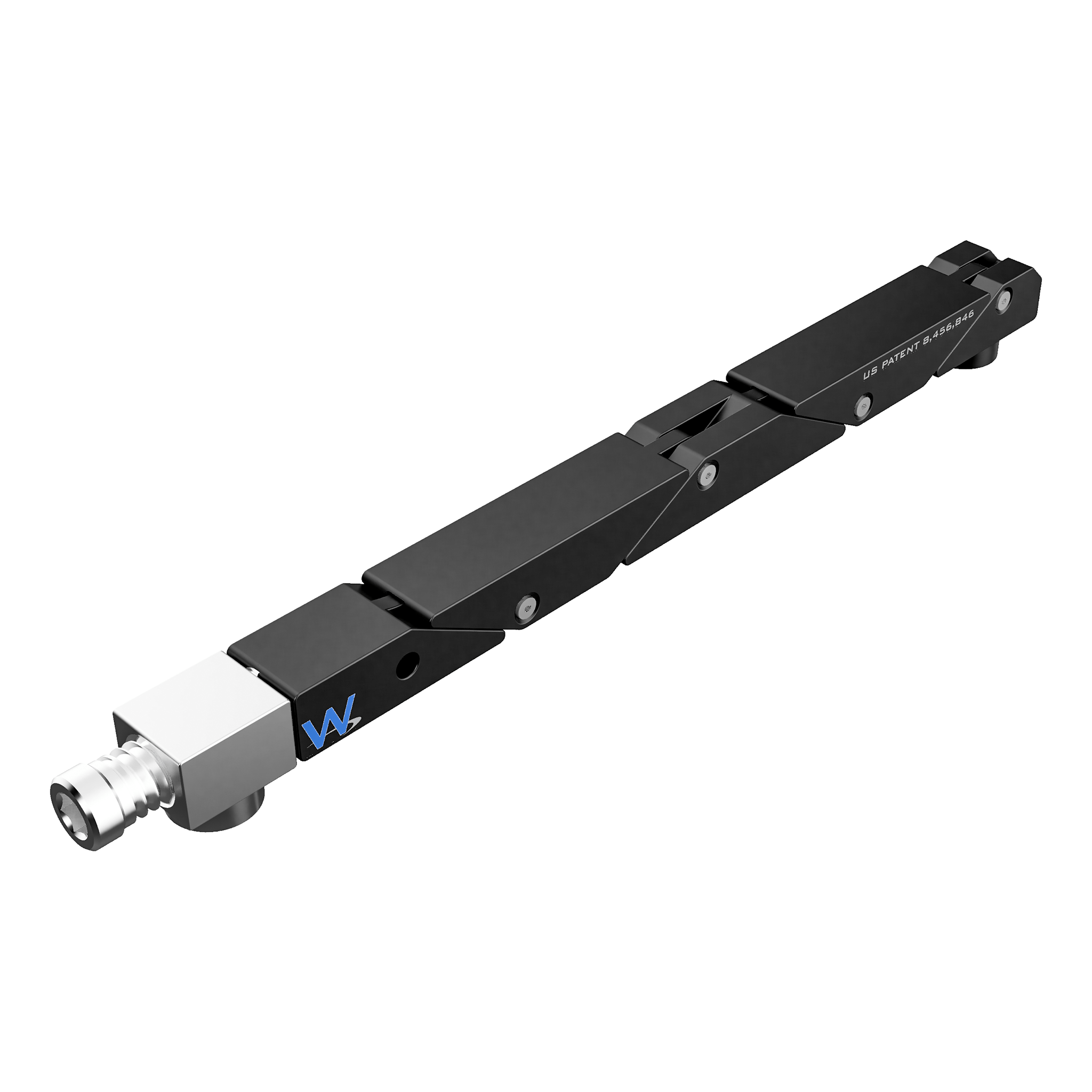
SWD5-28-200-250 Big Boss QUICK-LOCK
.200" x .250" profile | QUICK-LOCK | Big Boss | Smallest SOLIDWEDGE™ profile | Up to 900 lbs clamping force
VITA 78 6U Secondary Side, 160mm Cards
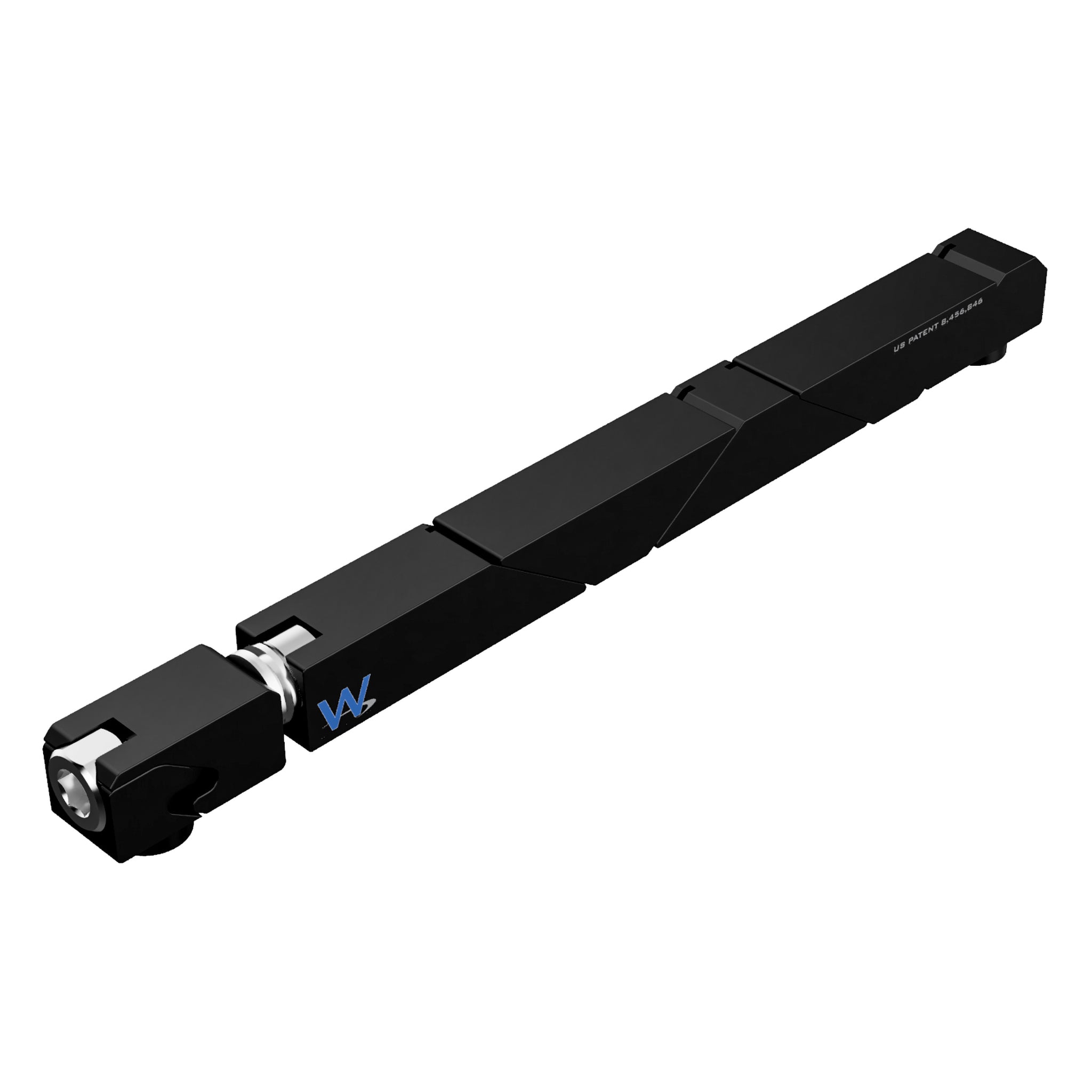
.375" x .375" profile | MAGNUM | 7 segments | Up to 2,300 lbs clamping force | Maximum thermal cross-section
Browse the full WaveTherm SOLIDWEDGE™ wedgelock product line or contact us to discuss your application requirements.
